
How to Start your S/4 HANA Journey: Operations First

From guest author Sven Wierzbicki. The fourth in our blog series on “How to Start your SAP S/4HANA Journey.”

You confront your challenges head on. You do not shy away from open heart surgery. You trust your ability to initiate and manage fundamental change. Welcome to the S/4HANA implementation option of “Operations First.”

Most companies, even the ones that had a rough SAP R/3 implementation, will finally get to the happy place where they have a stabilized ERP platform that meets the needs of their business operations. Can you call them out for trying to stay in their perceived “ROI zone?” 

These companies may feel much more at home with options to implement BW/4HANA or S/4HANA Central Finance before turning their operations upside down. 

There is, however, a different school of thought that exists. It subscribes to the idea to go after supporting the fundamentals of the business in the most advanced way possible. In the end, it does not matter how they arrive at the conclusion. What matters is that they right-size the effort to implement S/4HANA, by one of two options:

  • Shorten the period of parallel operations: When a company is centralized in its nature, it may make sense to strive for a shorter period of overlap between the R/3 sunset horizon and rise of the new S/4HANA star. If palatable, the idea of a big bang, or a small series of big bangs, should be the centerpiece of the digital transformation road map.
  • Or, extend the period of parallel operations: When the diversity of operations, the geography, or the limited appetite/funds dictate to refrain from doing “big bites,” an S/4HANA seed approach may be better. Acknowledge that you cannot do it all at once, and pick the right representative/business to be the seed for the future business template in S/4. Implement in reasonable chunks–with bigger steps–once experience gains traction.

Regardless of which way you go, never bite off more than you can chew. Doing so only sets you up for disappointment. Embracing the new functionality should be exciting for your business–especially those seen in Finance. Success should be experienced all along the journey!

So, which steps can you take to right-size your “Operations First” effort to implement S/4HANA? Let’s explore some key elements to avoid diving into an abyss:

  • Deployment Strategy – Build a road map that is custom fit to your company’s means and capabilities. Don’t shy away from tackling the S/4HANA journey; do, however, avoid overstretching your IT and business organization. Find a suitable seed business that fits your needs and go to the starting block. Do not wait too long, as there is still the R/3 sunset looming; you do not want to be pressured into a decision that may force your hand!
  • There is No Upgrade – We all like good news. That’s why it’s tempting to listen to relentless ‘experts’ claiming to have the tools “to make the upgrade easy.” The thing is, there is no true upgrade for the Business Suite. Yes, the technical HANA DB can be upgraded, but the functionality must be implemented anew. You may not need to reinvent the wheel–but see this upgrade as an opportunity to shed some of the snakeskin that is too tight, that you have outgrown!
  • Change is Inevitable – While it is undeniable that the knowledge of the S/4HANA product and its application to your business plays a big role, the Change Management aspect is even more important. You need to create a readiness for the project, within the C-suite, business, and IT organization, and choose a partner that you can trust. You will find that a well-prepared organization is, in the end, more important than a technical approach to the journey!

In closing, I want to reiterate that Vortex can be the trusted partner on your S/4HANA journey. Why? Because of the experts who can address the points raised above: 

  • Strategic Advisors who work with your senior management and help to build the S/4HANA roadmap and your Global Template based on real-life experience
  • Operations Experts in warehousing, manufacturing, supply chain finance, and more; who have worked in these key industries before becoming SAP consultants
  • IT Experts who translate business needs into programming of interfaces or add-ons, create BI applications, and much more

This concludes our blog series on choosing an approach to your organization’s SAP S/4HANA upgrade. Click through the links below to read the other blog posts in the series. We hope you find these insights helpful as you consider your best step forward. To learn more about how Vortex can be your main resource in this vital investment, contact us at 1.888.627.3640 or sales@vortexconsulting.net. 

#1: How to Start Your SAP S/4HANA Journey: Three Unique Approaches

#2: How to Start Your SAP S/4HANA Journey: Insight First

#3: How to Start Your SAP S/4HANA Journey: Central Finance First

How to Start your S/4 HANA Journey: Central Finance First

From guest author Sven Wierzbicki. The third in our blog series on “How to Start your SAP S/4HANA Journey.”

Let’s say you live on the banks of the powerful river of doubts. You know there is a new world on the other side of the river–and one way to get there is by building a bridge! This bridge needs to be strong, architected to last. It has to be founded in modern technology to carry the road to the new world. Well, SAP Central Finance can be your bridge to S/4HANA! Today’s post will focus on bridging the gap between seamless operations and painless innovations …

It is completely understandable that organizations want to embrace stability of their R/3 systems as long as they can. There are many factors playing into this notion, from limited budgets over avoiding the bleeding edge to simply the fear of making the wrong decision. The list of deterrents is lengthy. Also, the road map to S/4HANA needs to put a construct in place that lasts for 15-20 years to come. 

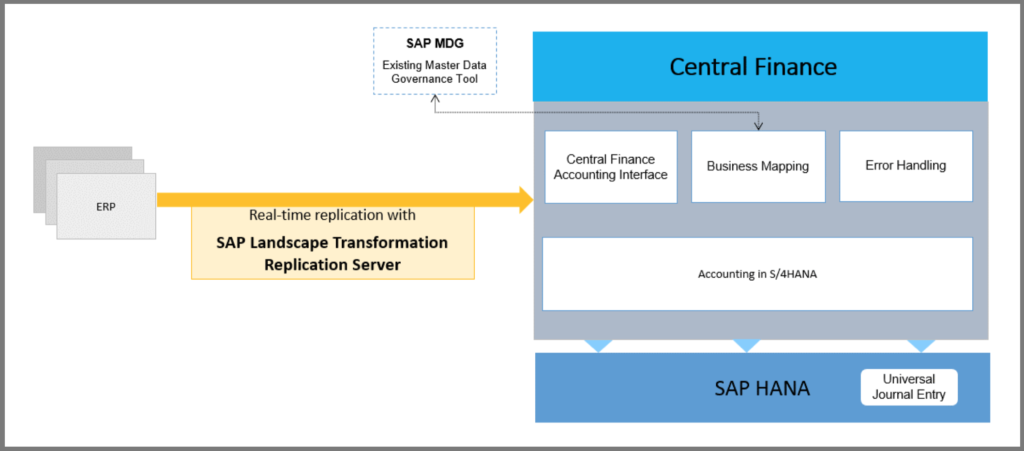
That’s where SAP Central Finance comes into the picture:

SAP S/4HANA Central Finance Options
Photo credit: SAP


Implementing something that supplements, rather than disrupts, operations can be a good option to “dip the toe,” so to speak, instead of making a big splash. Central Finance can be that sidecar solution that exposes the IT organization to the new technology. The benefits are certainly worth mentioning: it provides an excellent learning opportunity, contributes to the building up of an experienced resource, and creates a strong new foundation, while at the same time delivering new capabilities to the business.

Consider the following tangible benefits of SAP Central Finance:

  1. Systems Harmonization & Data Intake – Assuming that you have a systems environment that contains both SAP and non-SAP systems, SAP Central Finance offers a place to harmonize and centralize your financial data across the entire organization, with simplified and standardized interfaces and a robust platform for data transformation. It gives you the ability to elevate the level of systems integration after the fact, providing a cleaner set of data for central planning, processing, reporting, and financial consolidations.
  1. Reporting Capabilities – Regardless of the limited or diverse capabilities of the operational ERP systems, you can create homogeneous financial reporting by utilizing the strength of the new unified journal, enabling centralized profitability and profit center reporting right out of the box. Beyond that, the now harmonized data set can serve as input to the more sophisticated Business Intelligence tool sets like BW or BPC.
  1. Operational Centralization – While not yet perfect, the Central Finance system already has multiple functions available that play right into the concepts of shared services and business optimization. Noteworthy are the central payment option and certain tax features like tax withholding for centralized payments. 

Allow Vortex Consulting to assist you in implementing your SAP Central Finance system. We can help you start your S/4HANA journey without breaking the bank, focusing on these key actions:

  • Building a bridge to the new world of the S/4HANA technology
  • Educating your IT staff on the new capabilities and functionality
  • Delivering meaningful business features to your finance department & C-suite

In our next post, we’ll address the “Operations First” option for an SAP S/4HANA implementation, talking about a head-on approach that uses operations as the starting point. Click here to catch up on our first post in the series, “How to Start Your SAP S/4HANA Journey: Three Unique Approaches.” And be sure to get involved in the conversation on Twitter–you’ll find us here: https://twitter.com/VortexConsultng.

How to Start your SAP S/4HANA Journey: Three Unique Approaches

From guest authors Sven Wierzbicki and John Louw

If you’ve had the great fortune to travel around Maui, you know that the road to Hana is unique indeed. It is a winding stretch of astonishing beauty that rewards you all along the way. And with the right approach, your road to SAP S/4HANA could be a beautiful journey as well. See it as a rewarding experience from the start, and you will begin to harvest the benefits well before reaching the end point. It all comes down to planning your road map the right way…

Road to Hana Blog Post

Let’s face it–even with the recent pushback of the SAP R/3 ERP sunset, companies need to start planning a cost-efficient road map that has an individualized return of investment in mind. Today’s CIOs are held much more accountable for the way they stretch their budget–especially during the current health crisis, which has created additional budget strains.

When implementing SAP S/4HANA, you will be required to make sizable decisions. These decisions, and a chain of related movements and consequences, are much more significant to the current IT environment than simply selecting a new software that delivers additional capabilities. Initially, you’ll need to choose the organization’s approach to SAP S/4HANA implementation. Strategy comes into play big time as the approach you establish from day one touches the very underpinnings of the systems, their databases, and the hardware. It needs to touch on information security, cloud deployment, license acquisition, and systems selection, to name just some of the key aspects of the larger road map.

It’s easy to get lost in a topic as big as “SAP S/4HANA Implementation.” Today we focus on 3 potential options to embark on an S/4HANA deployment that make sense, are digestible for the organization, and can be achieved with relative speed and agility.

Let us explore these three potential choices to start your S/4HANA journey:

  1. Insight First – With an “Insight First” approach, you start with planning and consolidations. Either upgrade the existing BW and BPC environment, or start deploying an SAP-centric solution, choosing the most desirable way to get to better enterprise insight. It could be an existing on-premise BW solution that runs on S/4HANA, a BW/4HANA solution, the inclusion of SAP Analytics Cloud, or any hybrid of these tolls. Business Intelligence is the main driver to S/4HANA on this path.
  1. Central Finance First – Some take this approach as a way to dip their toe in, gain confidence, and build a solid backbone in preparation for future acquisitions. The “Central Finance First” method establishes the opportunity for data collection that combines SAP and non-SAP systems. This approach enables your IT department to become experts in the S/4HANA world before remodeling the operations, establishing a strategic approach to embarking on the journey that avoids overburdening the enterprise. 
  1. Operations First – There are a number of approaches out there with colorful names, from greenfield, to brownfield, to bluefield. Detailed information on each can easily be found online. In our upcoming “Operations First” blog post, we will focus on rightsizing the effort to make it part of a road map that can be sustained in parallel to an existing ERP R/3–pacing it right is a centerpiece of the approach.

Today’s blog post is the first in our series on selecting an approach to the SAP S/4HANA journey. Over the next several weeks we’ll outline the three options listed above in greater detail. You can also check out our recent blog post on why experience matters on the road to S/4HANA. Stay tuned for the next chapter in our SAP S/4HANA series. We thank you for your valuable time!

Why Experience Matters on Your Road to S/4HANA

I get it. We cannot indulge in yesterday’s ideas. We need fresh thinking to embrace the challenges of the new world we are living in. Machine learning, artificial intelligence, blockchain, and cloud–all things that did not matter that much when R/3 was introduced. Now they do matter–a whole lot–and they’ll play a big role in your road map to S/4HANA.

Let’s take a moment to recall the transition from R/2 to R/3 and all the hype that drew tidal waves of new consultants into the workforce. As I recall, it was an undeniable benefit to know the table names, the transaction codes, the base concepts that were at the core of the SAP package. The experienced consultants had a substantial edge over the newcomers–the status of the veteran SAP road warriors becoming immortalized by the coining of the “Platinum” distinction. 

SAP S4 HANA Consultant with Upgrade Experience

What does that mean in today’s terms? Does it still have meaning when talking about the road to S/4HANA? Yes, I am convinced it does! Consider this:

  1. Strategy – The journey you are about to embark on will stretch over the next two decades. S/4HANA will be around for about 20 years to come, and the tracks you lay and the switches you build will define your path substantially for the short- and medium-term future. You want to avoid costly dead-end streets, redos, and endless construction sites by putting a solid road map in place, based on a mix of strategy that is rooted in experience paired with new, fresh thinking that can lead you into the future. 
  1. Experience – As exciting as it may appear, not every wheel needs to be reinvented. Some of the new functionality in S/4HANA needs to be questioned for usefulness. Take the banking configuration that forced you to go into Fiori for no good reason–SAP got the feedback from experience in the market and brought the good old transaction code back.
  1. Insight – You had to be there before to truly understand things. To appreciate the deeper sense of the very thing in front of your eyes, you might want to have seen it before! Not everything entertains the idea of love at first sight, and not everything that is blissfully charming at first sight is the right thing for your business in the long run. Insight comes with experience.
  1. Results – You may enjoy teaching and training new resources, but it should be your resources and not the ones of your systems integration partner. When working with seasoned resources that made the transition to the S/4 world you will find a willingness to see things through, paired with experience–and success stories–from having done it before.  

SAP Consultants with S/4 HANA Upgrade Experience

In my opinion, it makes good sense to consider an SAP provider like Vortex that can be a partner on your journey to S/4HANA. We bring pre-screened, experienced resources to the table who understand the strategic aspects of your business and the hands-on elements of the S/4HANA package, and who have demonstrated knowledge out in the field. All of our people have 10+ years of experience in SAP, many of them with even 20 or more years.

Neither old nor new is good or bad by itself. But think about the effort that the experienced consultants have put in to reinvent themselves as new S/4HANA implementers. You want this determination on your side when the weather turns bad and the sea gets rough! You are the captain, and you need an advisor at your side who knows the cliffs by heart. Give us a call and we’ll help you navigate whatever challenges lie ahead.

Comparing SAP BPC and S/4HANA Implementation Options

There are many variables when it comes to understanding SAP BPC and S/4HANA implementation options. Today’s blog post is from guest author Johannes Le Roux, an SAP HANA Architect at Infogility. Join us as he walks through the basics:

In 2015, SAP launched its latest data management solution, SAP Business Planning and Consolidation (BPC). It was designed to operate seamlessly on SAP’s latest ERP platform, S/4HANA.

Before we delve into the options for SAP BPC and S/4HANA implementation, let’s quickly recap a few of the main benefits to this groundbreaking approach to data management: 

  • Real-time data access
  • Fast data load time and overall processing
  • Changes are implemented to core data, ensuring all sourcing comes from a single, centralized data pool

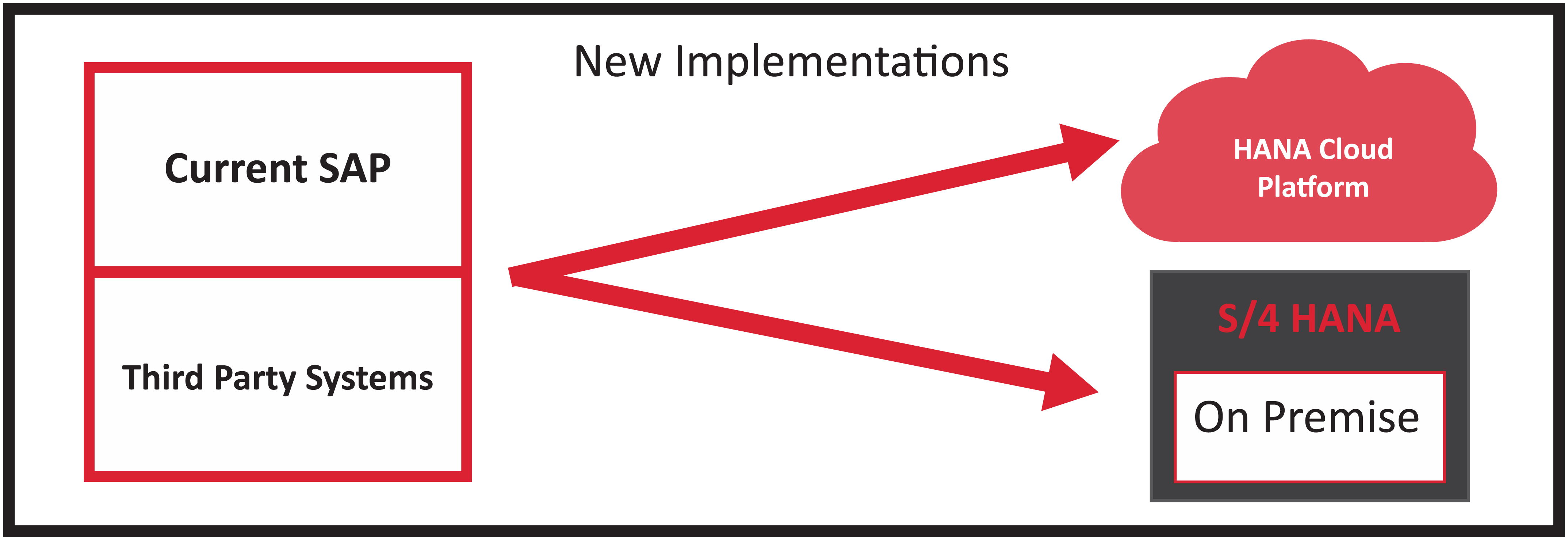
Option 1: New Implementation

Whether your organization is running on SAP or another ERP, implementing a new instance on SAP S/4HANA is an enticing option. Making the move to SAP’s most modern platform allows you the opportunity to realign and optimize existing business processes. If you have highly complex customizations that were built in years past, it’s likely that we can streamline and simplify those setups in a modern platform. Creation of a new SAP environment provides an opportunity to purge outdated data and establish a clean and well-structured data foundation for forward movement and growth. This environment can be developed either on-premise or in the cloud, depending on the unique resources and needs of your business. 

SAP BPC and S/4HANA Implementation Option 1: New implementation on-premise or cloud

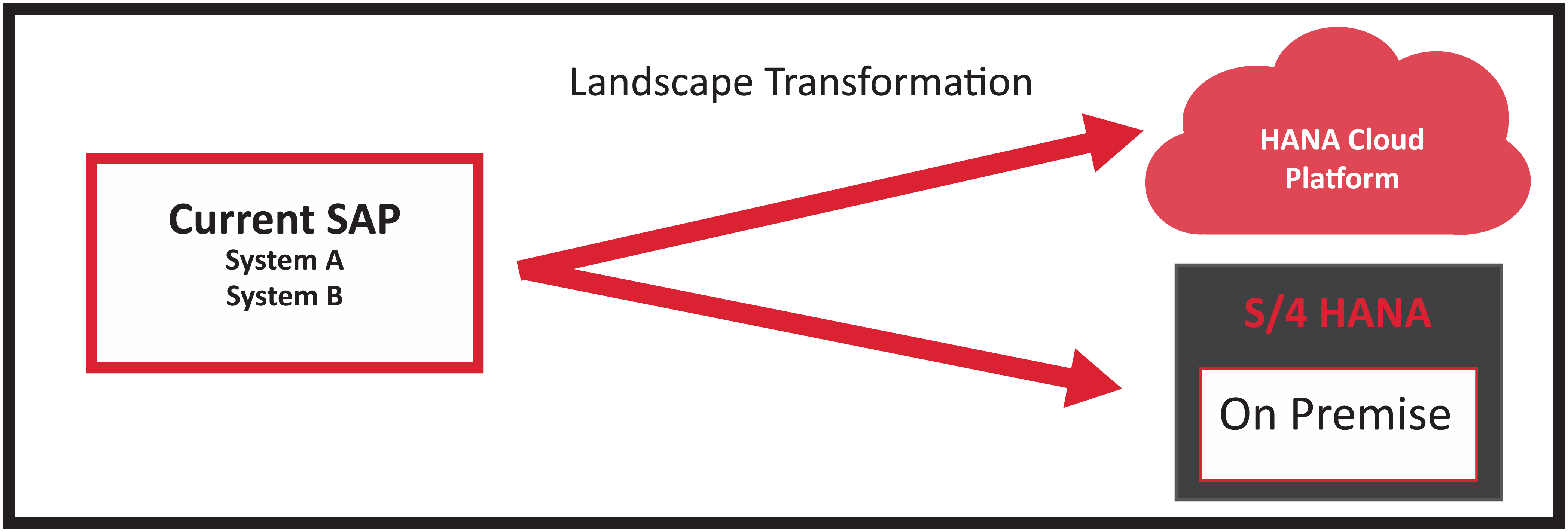
Option 2: Landscape Transformation

Landscape transformation is ideal for those organizations with an existing SAP landscape, or even multiple systems–whether distributed regionally or in one central location. Alternatively, it enables large organizations to extract specific entities or business processes from the larger environment and establish them in a standalone SAP S/4HANA setup. Outdated or overly complex business processes benefit from the simplification and development of a “clean slate.”

SAP BPC and S/4HANA Implementation Option 2: Landscape transformation on-premise or cloud

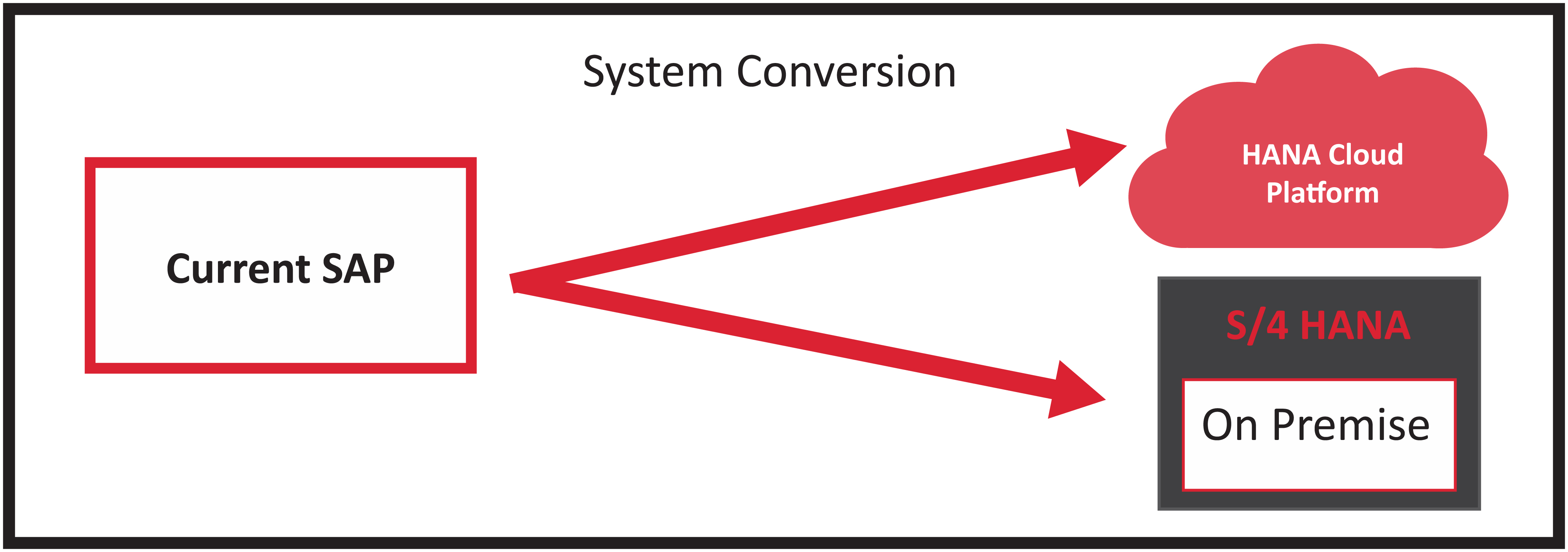
Option 3: System Conversion / Migration

Some customers seeking an SAP BPC and S/4 HANA implementation simply want to convert an existing SAP ERP system to SAP’s most modern platform. A system conversion, which establishes a new on-premise or cloud-based S/4HANA environment, is the ideal option for organizations in this position. Using SAP’s migration tools, business data and configuration are managed to ensure a seamless transition.

SAP BPC and S/4HANA Implementation Option 3: System conversion or migration from an existing ERP system

Option 4: Migration to New General Ledger (G/L)

Finally, there are businesses operating with a classic General Ledger that are ready to take advantage of the benefits offered by SAP S/4HANA Finance. This process may take place through the use of SAP’s General Ledger Migration Service or through the activation of a parallel ledger and document splitting strategy. A customized approach will ensure data streams and financial management functions remain in order throughout.

Initiating an SAP BPC and S/4HANA Implementation

Choosing to move forward with an SAP BPC and S/4HANA implementation is a strategic decision that will benefit your business. As technology and the business landscape continues to change, your ERP environment will be set up to outperform outdated systems. SAP has been a leader for decades, and with its latest launch of cutting edge ERP solutions, it has once again demonstrated that it will continue to be an industry leader for years to come.

Contact us today to learn more about your options for an SAP BPC and S/4HANA implementation and other SAP solutions.